Electronics warranty management is the process of receiving, validating, and resolving warranty claims for electronic products across retail, direct, and service-center channels. It ties together serial and purchase validation, RMA handling, repair or refurbishment, and failure tracking so a manufacturer can control return costs and protect its retailer relationships.
For electronics makers the pressure is different from most categories: claims move fast, retailers hold much of the power, and a bad batch shows up in public reviews within days. Dead-on-arrival units trigger retailer penalties, return-for-refund gets tangled up with true warranty defects, and connected “smart” devices add a diagnostic layer that older products never had. This guide covers how to run the whole thing without drowning in returns.
What is electronics warranty management?
Electronics warranty management is how manufacturers and OEMs handle the full lifecycle of a product-defect claim — from intake and serial validation, through DOA and defect triage, RMA authorization, repair or refurbishment, and back into failure analysis by SKU and component. It spans retailer, direct-to-consumer, and authorized-service-center channels in a single, trackable process.
Because so many electronics sell through retail partners, warranty management is also a retailer-relationship discipline. Chargebacks, DOA thresholds, and return rates all feed the scorecards those partners use to decide how much shelf space you get next season.
Why electronics warranty is uniquely high-stakes
Electronics combine high volume, short dispute windows, and public visibility — a combination that punishes slow or sloppy warranty handling faster than almost any other category.
- Retailer chargebacks and short windows. Retail partners deduct defect costs directly and enforce tight dispute windows. Slow documentation means you eat costs that weren’t yours.
- DOA rate drives the relationship. A high dead-on-arrival rate triggers penalties and reviews, and it’s one of the first numbers a retailer checks at the next buying meeting.
- Return-for-refund vs. warranty confusion. Customers and retailers routinely file a warranty claim when they mean a return, and vice versa. Triaging the two correctly at intake protects margin.
- Connected and smart devices complicate diagnostics. Firmware, apps, and connectivity failures blur the line between a hardware defect and a setup problem — and telemetry, used well, can settle it.
- Third-party extended warranties. Plans sold through Asurion, SquareTrade, and others sit alongside your own coverage and add another party to coordinate on every claim.
The 6 most common electronics claim types
- DOA / out-of-box failure — the unit never works on first use. The most reputation-sensitive claim of all.
- Battery or power failure — won’t charge, won’t hold a charge, or won’t power on after normal use.
- Screen or display defects — dead pixels, backlight bleed, touch failure, or cracked panels contested as defect vs. damage.
- Software / firmware issues — bugs, failed updates, and connectivity problems that read as hardware failures to the customer.
- Physical damage disputes — misuse vs. manufacturing defect, the gray-area claim where evidence at intake decides the outcome.
- Accessory / peripheral failures — chargers, cables, remotes, and bundled add-ons that generate high claim volume at low unit cost.
7 best practices for electronics warranty management
- Integrate directly with retailer warranty portals. Amazon, Best Buy, and Walmart each have their own process — connecting to them beats rekeying claims by hand.
- Automate RMA generation with serial and purchase-date validation. Stop out-of-warranty and duplicate returns before they cost you a shipment.
- Standardize DOA-vs-warranty triage at intake. A clear rule set keeps agents from misclassifying returns as defects and skewing your quality data.
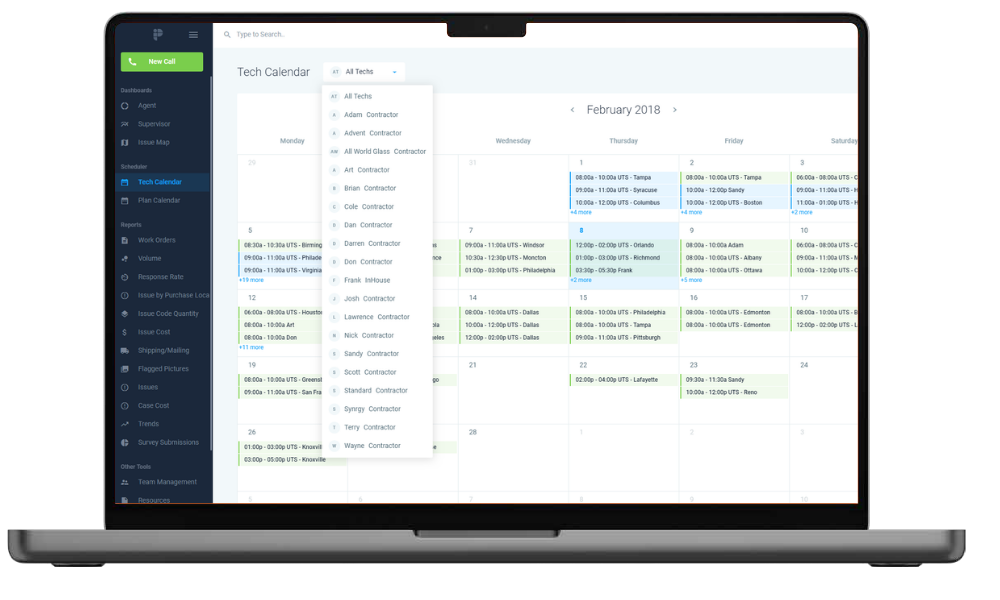
- Manage your authorized service center network from one platform. Dispatch, status, and parts should live where the claim lives, not in email.
- Track no-fault-found rate to spot process gaps. A rising NFF rate usually points to unclear setup, weak support, or a training issue — not a hardware problem.
- Feed connected-device telemetry into predictive claim detection. Where devices report their own health, use it to get ahead of failures and validate claims automatically.
- Track failure codes by SKU, component supplier, and manufacture date. This is what turns claims into root-cause insight and supplier recovery.
Electronics-specific warranty KPIs to track
- DOA rate — first-use failures as a share of units shipped; the number retailers watch most closely.
- RMA turnaround time — how long from authorization to resolved; the customer-facing speed metric.
- Retailer chargeback rate — defect deductions by partner; an early warning on quality and process.
- No-fault-found rate — returns with no reproducible defect; a direct read on support and setup friction.
- Extended warranty attach rate — the share of sales that add coverage; a revenue as well as a service metric.
- Refurbishment yield — the share of returned units recovered to resale condition rather than scrapped.
What to look for in warranty management software for electronics manufacturers
The generic feature list matters less than a few electronics-specific capabilities:
- Retailer API integrations for the major portals, so claims flow in instead of being rekeyed.
- RMA automation with serial and purchase-date validation built into intake.
- Authorized service network management for dispatch, parts, and status in one place.
- Component-level failure tracking so defects roll up by supplier, SKU, and manufacture date.
- Connected-device support that can ingest telemetry and tie it to a claim.
InsightPro is built to centralize exactly this kind of high-velocity, multi-channel warranty operation — automating RMAs, connecting to retailer processes, and rolling failures up to the component level so the next batch is better than the last.
Frequently Asked Questions
What is DOA rate in electronics manufacturing?
DOA (dead-on-arrival) rate is the percentage of units that fail or won’t power on the first time a customer uses them, out of total units shipped. It’s a closely watched quality metric because a high DOA rate triggers retailer penalties, drives returns, and damages reviews before a product gets a fair chance. Most manufacturers target a DOA rate well under 1%.
How do electronics manufacturers handle warranty claims?
Most run claims through a defined intake-to-resolution flow: the customer or retailer reports a failure, the manufacturer validates the serial number and purchase date, triages defect vs. misuse, and then issues an RMA for return and refurbishment, ships a replacement, or dispatches an authorized service center. The stronger the automation at intake, the faster and cheaper each claim resolves.
What’s the difference between an RMA and a warranty claim?
A warranty claim is the customer’s request for coverage — the assertion that a product failed under warranty. An RMA (return merchandise authorization) is the operational step that follows an approved claim: the authorization and tracking number that lets the customer send the unit back for repair, replacement, or refurbishment. Every RMA starts as a claim, but not every claim needs an RMA.
How can electronics manufacturers reduce warranty return costs?
Automating RMA generation with serial and purchase-date validation stops out-of-warranty and duplicate returns at the door. Tracking no-fault-found rate surfaces returns that were never defective — often a symptom of unclear setup or support gaps. And feeding failure codes back by SKU, component supplier, and manufacture date lets teams fix root causes and recover costs from suppliers, which is where the largest savings live.
Are extended warranties profitable for electronics manufacturers?
They can be, especially when the manufacturer owns the program rather than handing it to a third party. Extended warranty revenue is high-margin because most covered products never claim, but profitability depends on pricing coverage against real failure rates and keeping the loss ratio in check. Owning the program also keeps the customer relationship and the failure data in-house.
Conclusion
Electronics warranty management rewards speed, accuracy, and data. When intake, RMA handling, service dispatch, and component-level failure tracking sit in one system, returns cost less, retailer scorecards improve, and quality problems get caught while they’re still small.
Cut electronics warranty costs 20–30% and speed up retailer disputes. Schedule a demo of InsightPro to see how manufacturers run high-volume warranty operations from one platform.